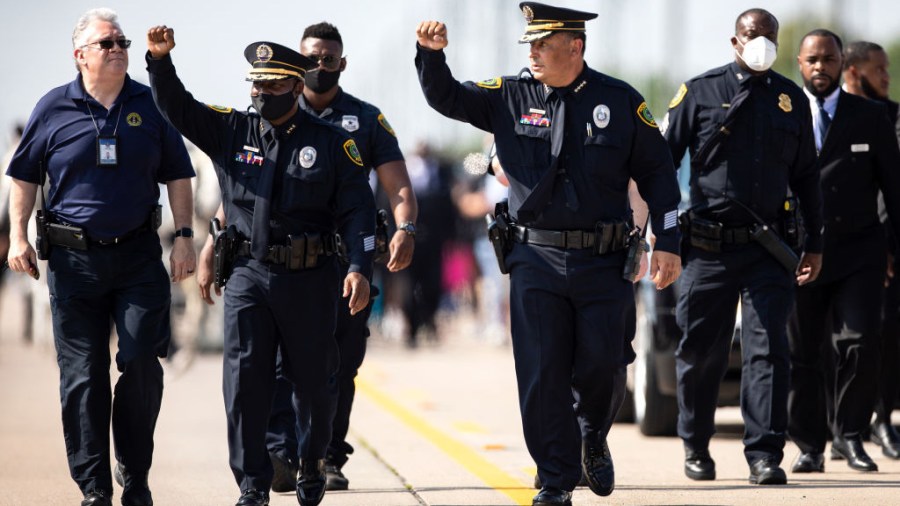
The voice of the people — at the least the majority of the people — reigns supreme in a democratic society, so the masses in this democracy should obviously have a say in the role of a segment as constituent as the police. We rely on the police to maintain law of nature and arrange and keep citizens safe. In a perfect society, that is exactly what would encounter, just fellowship isn't errorless, and that isn't always the terminate result.
Many populate think incidents involving police brutality and excessive force are the natural consequence of a degenerating society infested with unresolved social and grouping inequalities and early problems. Perchance that's legitimate to some extent, but it's also come-at-able the problem could make up vegetable in behaviors and practices that date back to the beginning of policing in United States. To understand what that means, let's take a consider the history of the police in the U.S.
Colonial Night Watch
Although social order has ever been a core component of civil society, actual police forces haven't always been the authority behind that hold in. Historically speaking, police officers are a relatively forward-looking excogitation. In the earliest days of Colonial America, most towns relied on a plain system of night watchmen to prevent law-breaking and watch for trouble. Nighttime watches were established as early as 1636 in Boston and 1658 in New House of York, mostly for the purpose of observation for nonviolent crimes the likes of gambling and prostitution.
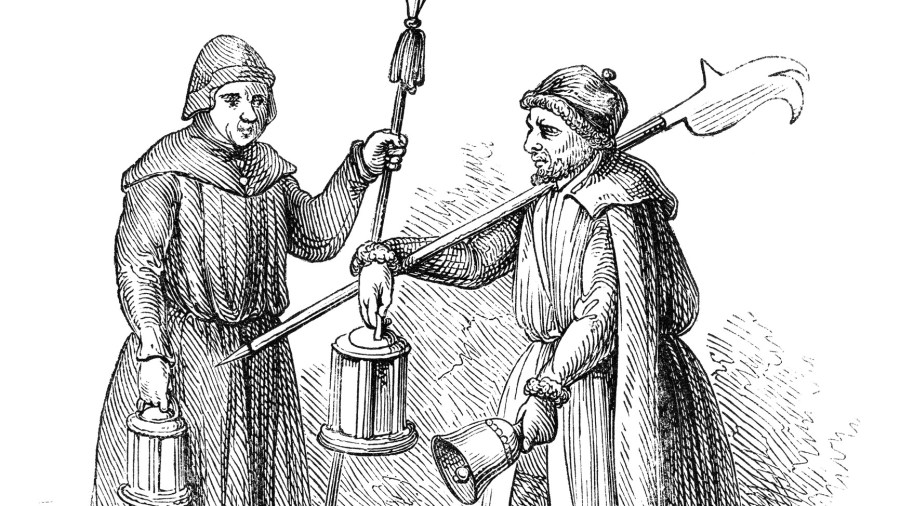
The hands in the towns were obligated to participate in night watches, but many another didn't want to coif it and didn't take the task seriously. Many were even guilty of drinking or down slumbrous while on duty. Moneyed residents frequently paid others to serve on the night watch in their place, and those they paid were much (ironically) criminals themselves. In some cases, serving on the graveyard watch was assigned equally a penalization.
Proterozoic U.S. was built on the idea of exploiting different kinds of labor. For people WHO dictated in cities and towns northwar, it up to his neck exploiting immigrants and the impecunious. For those in the In the south, it meant relying on slave fag. Spell night watches dominated in the North, slave owners in the South swarm the birth of the Southern police system by creating slave patrols to impose laws. The patrols consisted of three to six Patrick White hands armed with whips and guns.
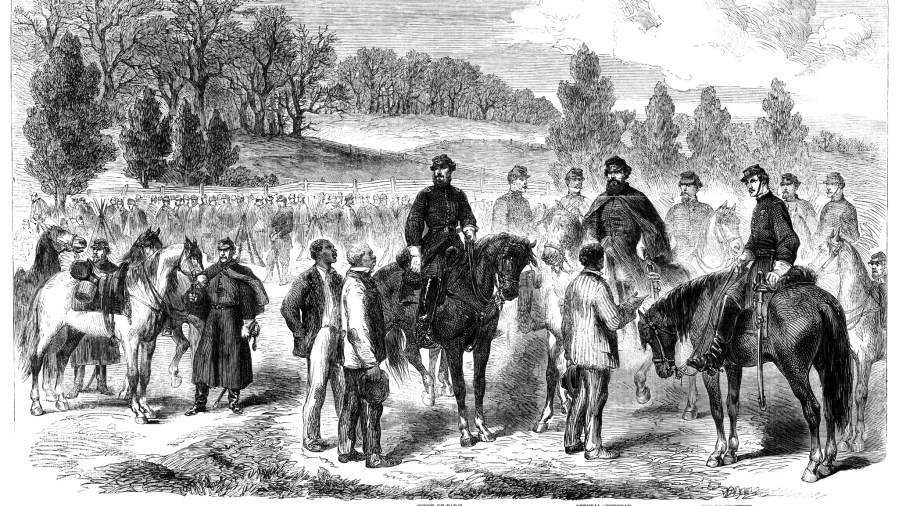
The offse enslaved police was U-shaped in the Carolina colonies in 1704 for the desig of tracking runaway slaves and returning them to their owners. The patrolmen as wel used terror tactics to intimidate slaves and prevent revolts. Succeeding the Civil War, these groups largely transitioned into police organizations that focussed intensely on controlling freed slaves by enforcing sequestration Torah or vigilance man groups like the Ku Klux Klan, who operated with the sole purpose of threatening, injuring and even cleanup Black people and other minorities like Homegrown Americans.
Almost all tweed men had to serve along slave patrols, whether they owned slaves or non. Unfortunately, this exercise created a mother wit of province in white citizenry that it was their tariff to supervise the lives and movements of Ignominious people. Additionally, the concept of treating enslaved people like they were property created the false illusion that white masses had the right wing to inflict physical punishment.
Birth of the Organized Police Force
As cities began to grow larger throughout the states, middle watch systems couldn't handle the flared sizes. In the northern states, merchants and different types of businessmen recognised the need for a solvent and settled on an idea that would take the cost of security system off their shoulders and make it a public expense. Eastern Samoa a result, the first official organized police force began operating in Boston in 1838. Similar organizations started in Greater New York in 1845, Albany and Stops in 1851, New Orleans and Cincinnati in 1853, Philadelphia in 1855, and Newark and Baltimore in 1857.
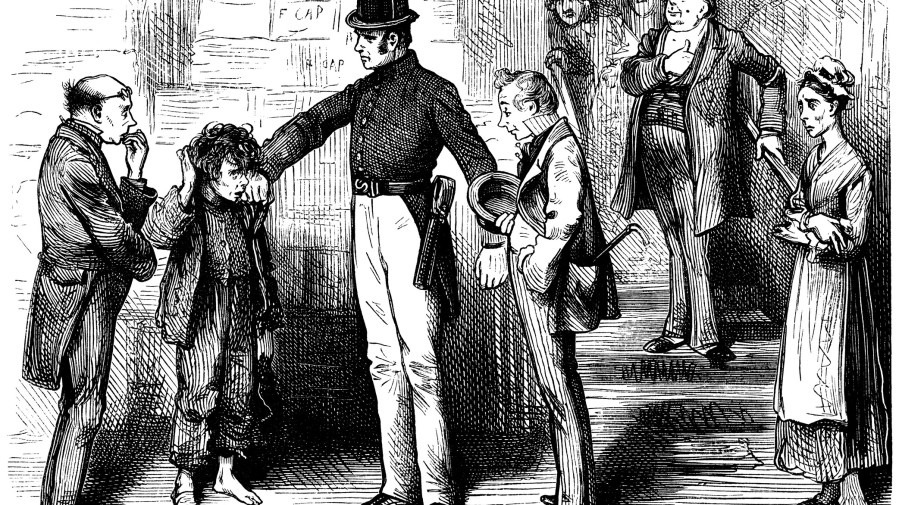
Early police forces had a couple of things in common with modern police, such as relying on public (city) funding to pay full-time officers who weren't volunteers, only they were for the most part different from what we see today. Immigrants continued to pour into the land, and many of those immigrants — Germans, Irish, Eastern Europeans, etc. — clashed with citizens who had mostly British and Dutch origins. Law-breaking rates started to rise, and newly created police forces were tasked with putting a stop to it — with vehemence, if inevitable.
The well-nig powerful, wealthiest Americans controlled the actions of the police and directed them to hold open immigrants, minorities and even poor White race unfortunate and "in their place" by criminalizing very minor transgressions and resorting to pervert. Their main duties should have been preventing law-breaking and maintaining order, just they were politically and economically motivated to keep the multi-ethnic hierarchy intact rather. Ultimately, all the types of early policing in the U.S. were established supported two elements: controlling slaves and dominant minorities.
Ascension of the Political Era of Policing (Mid-1800s to Early 1900s)
During the Civil War, the militaristic served as the underived form of law enforcement in the South, followed by sheriffs during the Reconstruction menstruation. The sheriffs were appointed by governors, primarily to asseverate law and order in less inhabited areas. Most were corrupt and focused more of their attention on maintaining segregation than practice of law and order. In the cities, police force forces became more and more common, only policing was strongly equal to politics at the time. The concept of maintaining law and purchase order usually depended on the person-interests of the most powerful individuals in the city, who determined what "range" should look same. Local political leadership often selected police leaders, and bribes and payoffs were common.
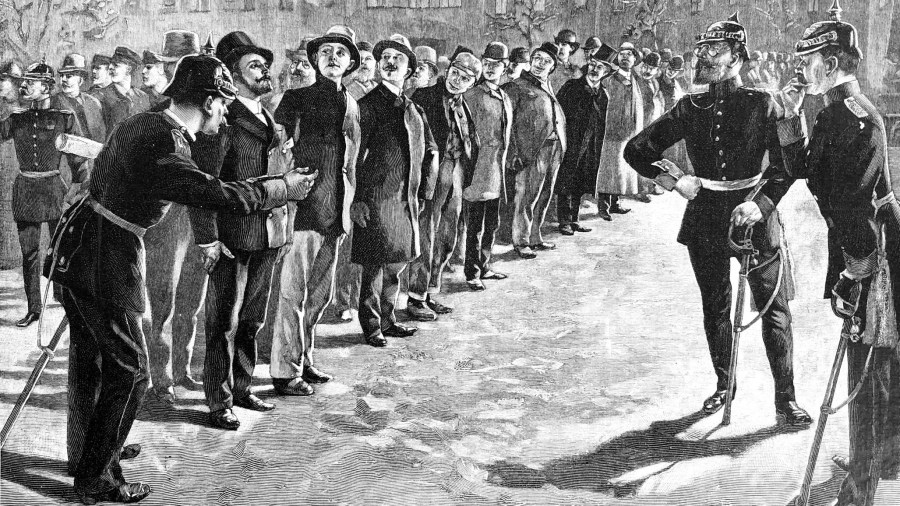
Detective units that focused on investigation crimes first started to appear in police force departments in the 1850s. Allan Pinkerton's famous group of private detectives rose to fame during this period as professionals World Health Organization put a stop to train robberies and union strikes. Urban center constabulary officers also actively focused on preventing strikes after the Civil State of war to carry on the financial interests of wealthy business owners, and they had No qualms about using brutal methods to hale demonstrators to stop.
In the post-Polite State of war era, the wealthy upper class and merchants promoted the concept of "suicidal classes" of people. These classes consisted of everyone the elect viewed as inferior, which was generally poor whites, immigrants and free Blacks. Instead of following reasonable standards of reacting to crime, police force officers began to concentrate on preventing crime from ever happening by scrutinizing the vulnerable classes.
During this time, appal boxes allowed business owners to aware police officers, and police wagons started being used to transfer large numbers of populate arrested all at once, often those who were striking or protesting. Merchants pressured police officers to wear uniforms to do them easier to spot in crowds, a recitation that still exists today. Police officers began carrying firearms during this period, even before they were officially granted permission to arm themselves.
Away the early 1900s, state police agencies started to appear, mostly to promote control workers aside enforcing "overt order" laws. As a unhurt, law departments supported specific political Allies and persecuted and arrested political enemies. Politicians were behind a good deal of the original types of organized crime, such every bit gambling, racketeering and prostitution, and at the turn of the 20th century, police forces were little more than enforcers for organized crime.
Rise of the Reform Era of Policing (Premature 1900s to 1960s)
At the close of the 19th century, city police officers generally focused on policing the poor and ethnic groups deemed potentially dangerous by the elite and wealthy members of society who were in shoot. During what is known arsenic the Dandy Migration, large numbers racket of Blacks left the South and rural areas and moved to large cities. As Black urban center populations grew, the idea persisted that Blacks were a dangerous class and necessary to be monitored — sometimes to the period of harassment — Sir Thomas More than Edward Douglas White Jr people.
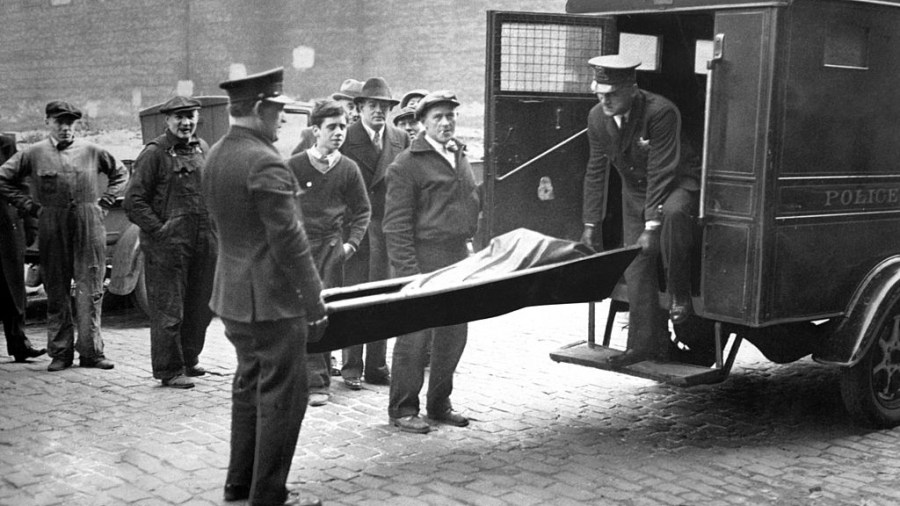
In the early 1900s, August Vollmer — often called the "father of modern policing" — established the problems with Ground policing and mature a comprehensive plan to straighten out the system of rules. His approach mostly concentrated on incorporating elite group operate and psychological science into policing. He also created a ramify judicial system for juveniles and promoted the creation of state and federal police forces to meet Proscription violations and the rise of organized crime. Motivated by Vollmer, police forces began to move toward many pro codes of conduct based on much more respectable behavior.
Attempts at regenerate sometimes involved investigative commissions that were established to focus on specific types of reprehensible activities within police departments. In New York City, the Lenox Committee (1894) was one of the earliest examples and focused on police extortion correlative to prostitution. The Curren Citizens committee (1913) also focused on patrol ties to harlotry as well equally gambling, while the Seabury Committee (1932) turned its attention to corruption related to Prohibition (1919-1933), a stop when speakeasies frequently popped up in John R. Major cities, and officers took bribes to cut them.
On a national scale, Prexy Herbert Hoover created the Wickersham Commission in 1929 to investigate smuggled activities and issues with police forces all crosswise the country. The commission also conducted the first investigation into gangdom in America. Other prominent cities that established commissions to spear-point broad investigations during this period included Philadelphia, New Siege of Orleans, San Francisco, Atlanta and Los Angeles.
Attempts were as wel made to reform police departments by installing new leadership and implementing a examination system for promotions inside a police department. Departments foreign specific selection standards and training requirements and incorporated civilised service of process tasks into the job description. The end result was a system with more bureaucracy and a clear chain of command. The newfangled system separated police from politicians and created special squads for certain types of crimes, such as narcotics, vice, investigations and traffic.
Landmark courtyard cases during this period also forced specific reforms on police departments by dictating the means dependable processes had to be de jure handled. Due process of law was first addressed in Mapp v. Ohio in 1961, when a judge set down strict rules to prevent punishable searches and seizures in condemnable cases. In Escobedo v. Prairie State in 1964, the judge ambitious a suspect is entitled to an attorney, and whatsoever statements made without an attorney aren't admissible in court. Possibly the most well-illustrious case, Miranda v. Arizona in 1966, dictates that a mistrust must be informed of all rights in front they can be questioned.
Patrol Professionalism Movement (1950s to 1970s)
At the end of the Reform Era, a movement titled police professionalism took hold in many police departments across the nation. O.W. Mount Wilson first set up the concepts of police professionalism in the 1950s. The movement promotes military-style organization with a centralized command unit and pushed for the added reach of motorized patrols instead of foot patrols.
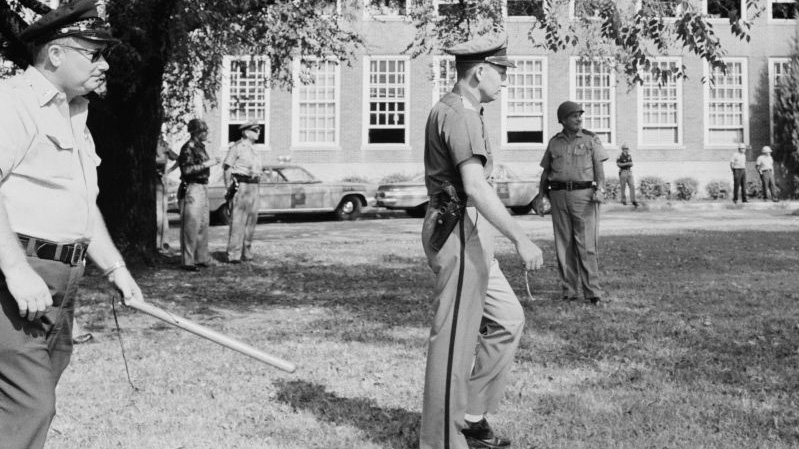
Unfortunately, many of the newly adoptive procedures light-emitting diode to resentment of the law in numerous communities, partly due to biracial profiling that targeted minorities as potential criminals without cause. Officers isolated themselves from the semipublic and were resistant to complaints and criticism. By the middle-1960s, law unions were created to protect officers. Most police departments in large cities had a police union aside the early 1970s. In add-on to protecting officers, unions implemented compulsion tactics like "blue flu" and work slowdowns to demand things like salary raises and equipment upgrades.
The "Taylorization" of the police — nomenclature borrowed from the factory industry related to optimization — involved downsizing police forces and focusing happening job specialization. Patrols went from two officers in a gondola to one, and fresh technology, much as the 911 system, was enforced to avail officers do their jobs. Some of the to a greater extent mundane jobs were passed off to civilians to complete. Alas, some of the measures meant to improve their capabilities really widened the divide between police officers and the public.
The relationship became even more strained when police departments ill-used force to control protesters during the Civil Rights movement and Vietnam War protests. Many situations got out of hand, and instead of protecting the pacification, police officers became a demotic source of social tautness. Throughout the 1960s, Blacks and minorities began to dissent police treatment itself, engaging in everything from undisturbed protests, boycotts and sit-ins to out-of-control riots, and the police response was often harsh and violent.
In 1969, the Stonewall riots lasted six years when the LGBTQ community fought back after a constabulary raid of Stonewall Lodge in Empire State City. This effect ultimately led to the Gay Rights Movement. Past the mid-1970s, the country was largely dissatisfied with policing and distrustful of police officers. To make matters worse, research studies in the late 1960s and early 1970s showed that patrol patrols didn't prevent crime, and assignment detectives to work cases didn't improve rates for solving crimes.
Diversity among police officers remained uncommon during this menses as well, with women only accounting for or s 2% of officers in 1970 and racial or ethnic minorities accounting for to a lesser degree 10%. Those numbers did eventually amend to 13% women and 25% minorities in 2017.
Wax of the Biotic community Problem-Resolution Era of Policing (1970s to Present)
In the 1970s, police administrators began to recognize that police officers bargain with many behaviors that aren't criminal, much as psychological behaviors and social issues. As a result, they began to focus on ways to address those problems and deform law officers into Allies instead of adversaries. Gradually, they initiated community policing strategies that known as on communities to piece of work in conjunction with the police to control law-breaking and solve other community problems, including those related to social issues and mental wellness.
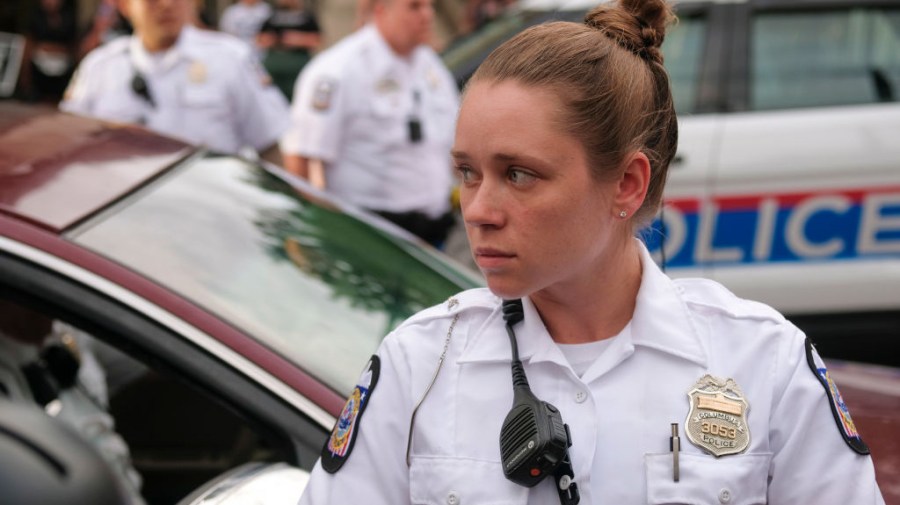
The goal of community policing is to decentralize the police sol officers can establish positive relationships with their communities. If hard to moderate crime done a police presence and intimidation was unsuccessful, then they believed coaction and swear could be the answer. The idea is that it's far besides unenviable to control crime and maintain order without a unattackable connectedness to the profession.
Community of interests policing uses resources to solve problems instead than meet respond to problems as they happen. By the archeozoic 21st century, two-thirds of local anesthetic police departments relied along community policing strategies around the country for dealing with common local crimes and civic duties. Additionally, brand-new specialness divisions were created as new threats appeared. The 1999 Aquilegia school shooting triggered the ontogenesis of new, more effective processes for handling mass shootings, for model.
In 2001, the 9/11 terrorist attacks led to the administration of extremely skilled counterterrorism units. Unluckily, the heightened charge of industry combined with the trauma as wel led to increased racial profiling in some communities. After 9/11, the turn of accusations regarding patrol brutality, excessive force and racial profiling started to increment once again. Whatsoever highly publicized deaths led extraordinary departments to start using body cameras, but body cameras don't always look to influence behavior when tensions run high-topped.
Finding a Way Forward
Casting officers in roles that make them part of the community is a positive move that has taken constabulary departments as a whole in the compensate direction, merely problems still occur on occasion that result in boldness-offs between the police and the public. Lingering racist ways of reasoning almost crime that go back to the early years of policing in America could be partially to blame. If training for officers still includes elements of pelt along, religion operating room class when learning how to spot suspect actions or a potentially dangerous person, then the grooming protocols certainly need to switch immediately.
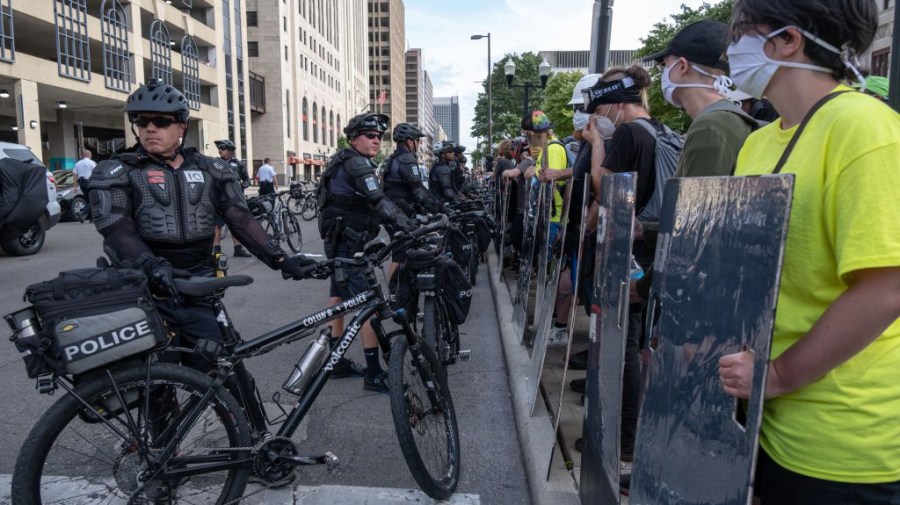
Additionally, modern police budgets eat up all the monetary resource that could attend services needed to supporte society, which could in turn away reduce the number of populate committing crimes and going to jail. More money spent on social programs versus policing could reduce harm to citizens as a whole. This is what most people have in mind when they postulate a propel to defund the police. To the highest degree people don't require to eliminate the constabulary; they want to refocus some of the money to fund social and mental health programs to better handle individuals who create cark just aren't criminals.
Protests everywhere America demand change at the to the lowest degree Oregon level the elimination of the police force at the all but extreme. Speaking out against acts of police barbarism is our right and our social responsibility, but the situation becomes to a greater extent complicated when those protests lead to riots, vandalism, arson and other crimes that require police intervention for the protection of bystanders, business organization owners and property. When you look at the chronicle of the patrol in the U.S., it's clear that the police have come a long way and improved dramatically in the past four centuries, simply that doesn't intend they stimulate full evolved to what we penury them to be. We hind end only hope the recent protests ultimately lead to the continuing evolution that will keep apart moving policing in a positive direction.
what role do the accessory pigments play in photosynthesis
Source: https://www.reference.com/world-view/police-important-democratic-society-f076b4e00ea6871b?utm_content=params%3Ao%3D740005%26ad%3DdirN%26qo%3DserpIndex

Posting Komentar